
The Vault Standard
Experience the science of small-batch, UV-B enhanced genetics. Secure your jar while the vault is open.
Shop The CollectionThe Molecular Secret: How UV-B Light Drives Cannabis Potency
When you look at the frost-covered buds of a premium Kapow Berries harvest, you aren’t just looking at genetics; you’re looking at a biological survival response.
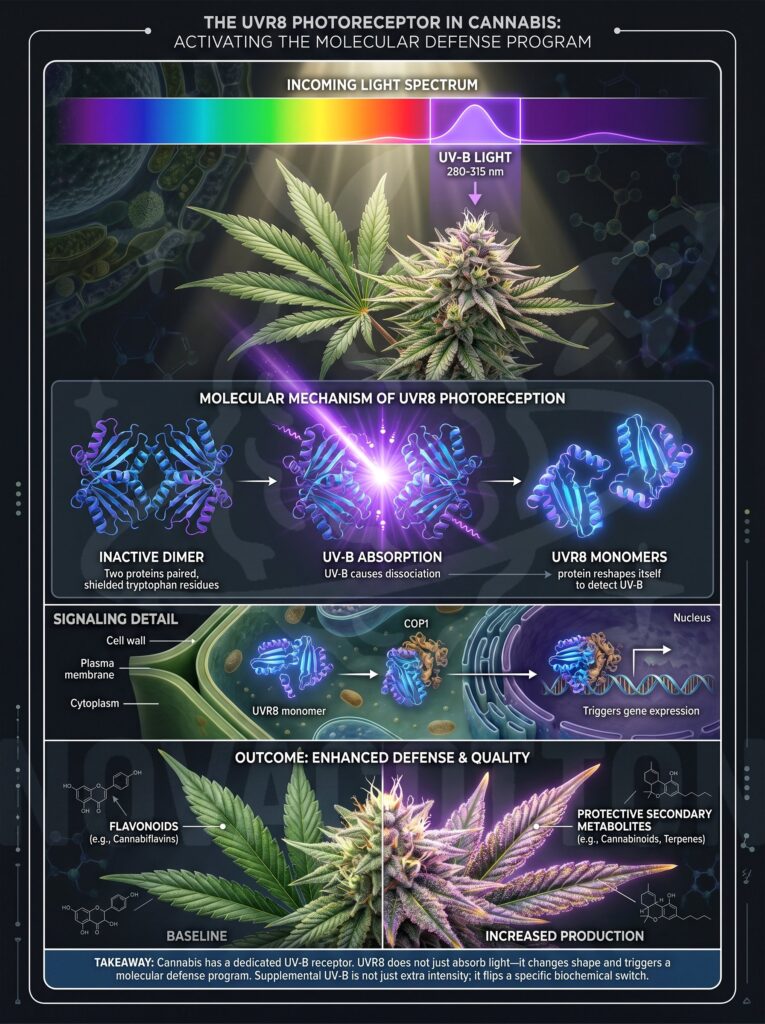
Many growers focus on light intensity, but true craft quality comes down to light spectrum interaction. Your plant has a dedicated photoreceptor whose only job is detecting UV-B light… and the protein physically changes shape to do it.
The UVR8 Mechanism: Nature’s Molecular Switch
UVR8 exists inside the plant as a paired dimer when no UV-B is present. The moment UV-B photons are absorbed, the protein breaks apart into two separate monomers. That structural transformation is the signal. This shape change allows the monomer to interact with COP1, directly triggering specific changes in gene expression.
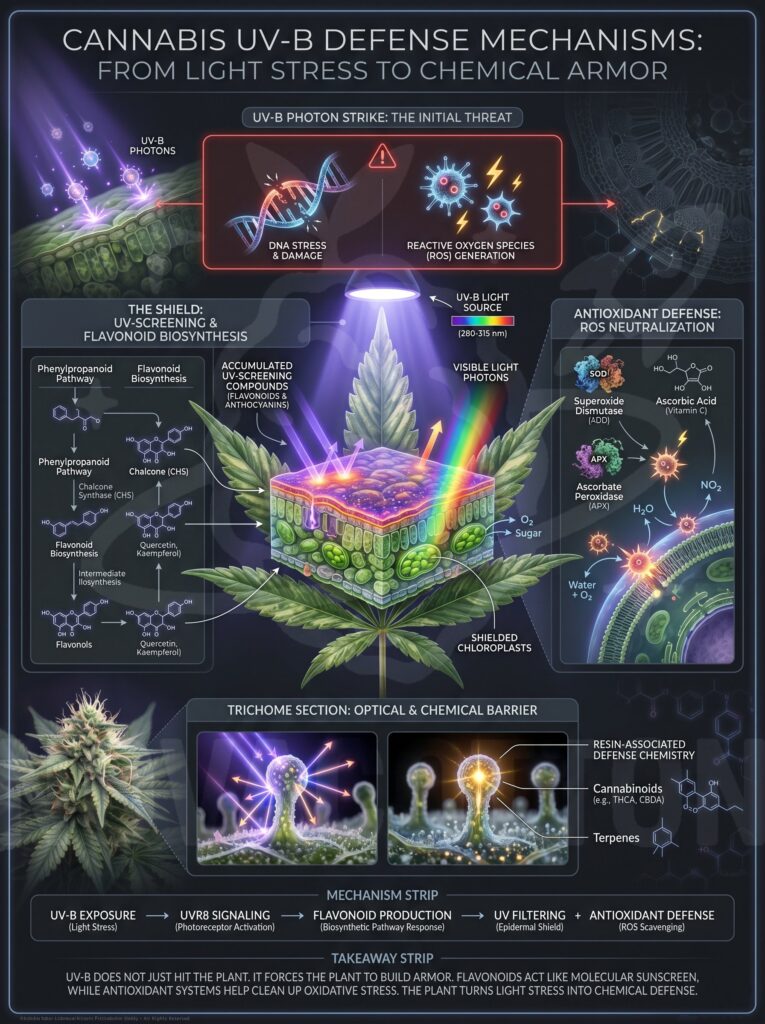
- UV-B Exposure: Acts as the primary signal (light stress).
- UVR8 Signaling: The molecular switch that detects the light.
- Biochemical Response: The plant activates pathways to build flavonoids and terpenes.
Why UV-B Matters for Terpene Profiles
One of the downstream effects of this signaling is the increased production of protective secondary metabolites. UV-B exposure upregulates pathways that build flavonoids and certain terpenes—compounds the plant uses to shield itself from UV damage and oxidative stress.
This is a major reason why outdoor cannabis, grown under full-spectrum sunlight, often develops richer and more complex profiles than the same genetics grown indoors under standard LED lighting that lacks meaningful UV-B.
Turning Light Stress Into Chemical Armor
Your plant isn’t just reacting to “brighter light.” It’s using a protein that literally reshapes its own molecular structure to detect one specific wavelength (280–315 nm) and rewrite parts of its chemistry in response.
By adding supplemental UV-B in an indoor environment, we aren’t just increasing light intensity. We are flipping a precise molecular switch that tells the plant to invest more heavily in its own chemical defense system. This is the “Vault Standard”—understanding the science of how to push a plant to its absolute maximum potential.
Frequently Asked Questions
1. Does UV-B light make cannabis more potent?
Yes. By triggering the UVR8 photoreceptor, UV-B light signals the plant to increase its production of trichomes and secondary metabolites—including cannabinoids and terpenes—as a form of “chemical armor” against the light. This leads to higher-quality, more aromatic flower. You can view our latest craft results in our shop.
2. Is there a difference between sunlight and indoor grow lights for UV-B?
Sunlight provides a broad spectrum that naturally includes UV-B, which is why outdoor flower is often so aromatic. Many standard indoor LEDs lack significant UV-B, which is why boutique growers use supplemental UV-B to “flip the switch” and mimic these natural stress responses indoors for superior quality.
3. Why do terpenes increase under UV-B light?
Terpenes and flavonoids act as the plant’s biological sunscreen. When the UVR8 receptor detects UV-B, the plant redirects energy to synthesize these protective compounds. The more the plant feels it needs to protect itself, the more “defense chemicals” (the terpenes and cannabinoids we enjoy) it produces. Stay updated on our cultivation techniques on our X (Twitter) feed.